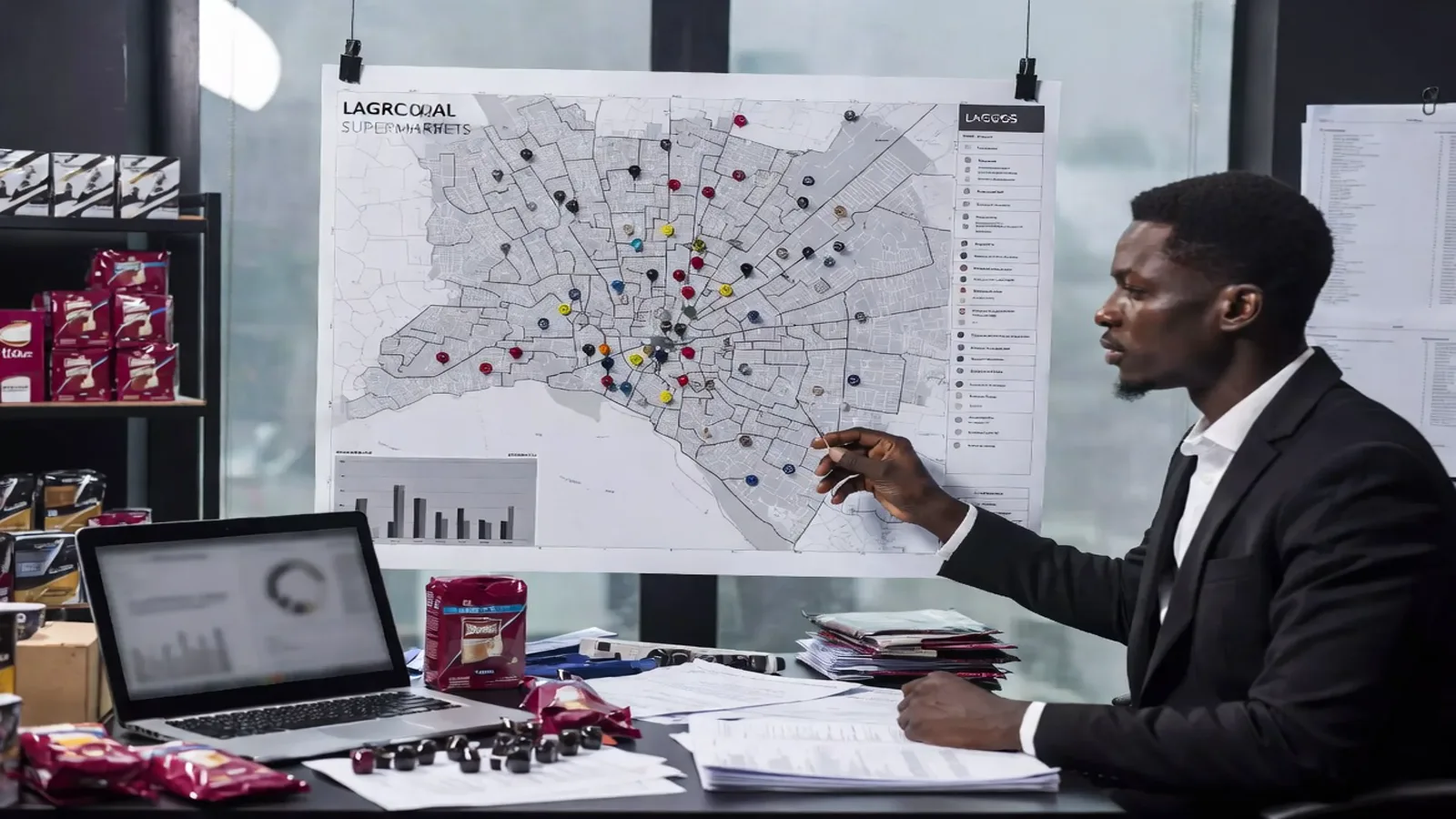
Listed vs active: the penetration distinction that matters
A brand is "listed" in a store when it has been added to the store's product range and is nominally available for purchase. A brand is "active" in a store when it is consistently in stock, correctly priced, and generating regular sales velocity. The difference between listed and active is the gap that most brands do not measure and most distributions fail to close.
DALA field data shows that the average brand with a reported 80-store listing base in Lagos modern trade has an active penetration, defined as stores with product available and selling above a minimum velocity threshold, of 55–65 stores. The remaining 15–25 stores either have the product permanently out of stock, have received only one or two deliveries since listing, or have received stock that has not moved because of shelf position or pricing issues.
Penetration data by zone
| Lagos Zone | Modern Trade Outlets | Avg Brand Penetration (listed) | Avg Active Penetration |
|---|---|---|---|
| Lagos Island / Victoria Island | 180–220 | 45–65% | 32–48% |
| Lekki / Ajah corridor | 140–180 | 35–55% | 25–40% |
| Mainland (Ikeja / Yaba / Maryland) | 200–280 | 30–50% | 20–35% |
| Surulere / Alimosho | 160–220 | 20–40% | 12–25% |
Source: DALA field data and brand partner reporting, Lagos modern trade 2024–2025. Active = selling above 20 units/month.

What closes the listed-to-active gap
Closing the gap between listed penetration and active penetration is one of the highest-return activities in Nigerian modern trade. The stores that are listed but not active already have a buyer relationship and a shelf allocation. They are not generating revenue not because the market is wrong but because they are not being managed.
The actions that convert listed-but-inactive accounts to active ones are: a field visit to confirm the product is on shelf and correctly positioned, a delivery to restore stock if the product has sold through without reorder, and a pricing check to ensure the product is at a competitive retail price. In most cases, these three actions, executed within a week, convert an inactive account to an active one that will then require ongoing field management to stay active.
Why depth beats breadth at growth stage
For most Nigerian FMCG brands at the 50–200 account stage, increasing active penetration within the existing listed base generates more incremental revenue per naira of effort than adding new listings. A brand that converts 20 inactive accounts to active status gains 20 new revenue-generating locations without any listing fee, any new buyer negotiation, or any onboarding overhead.
DALA's account activation approach specifically addresses this conversion challenge, using weekly field data to identify listed-but-inactive accounts and prioritising activation visits before new account development.


