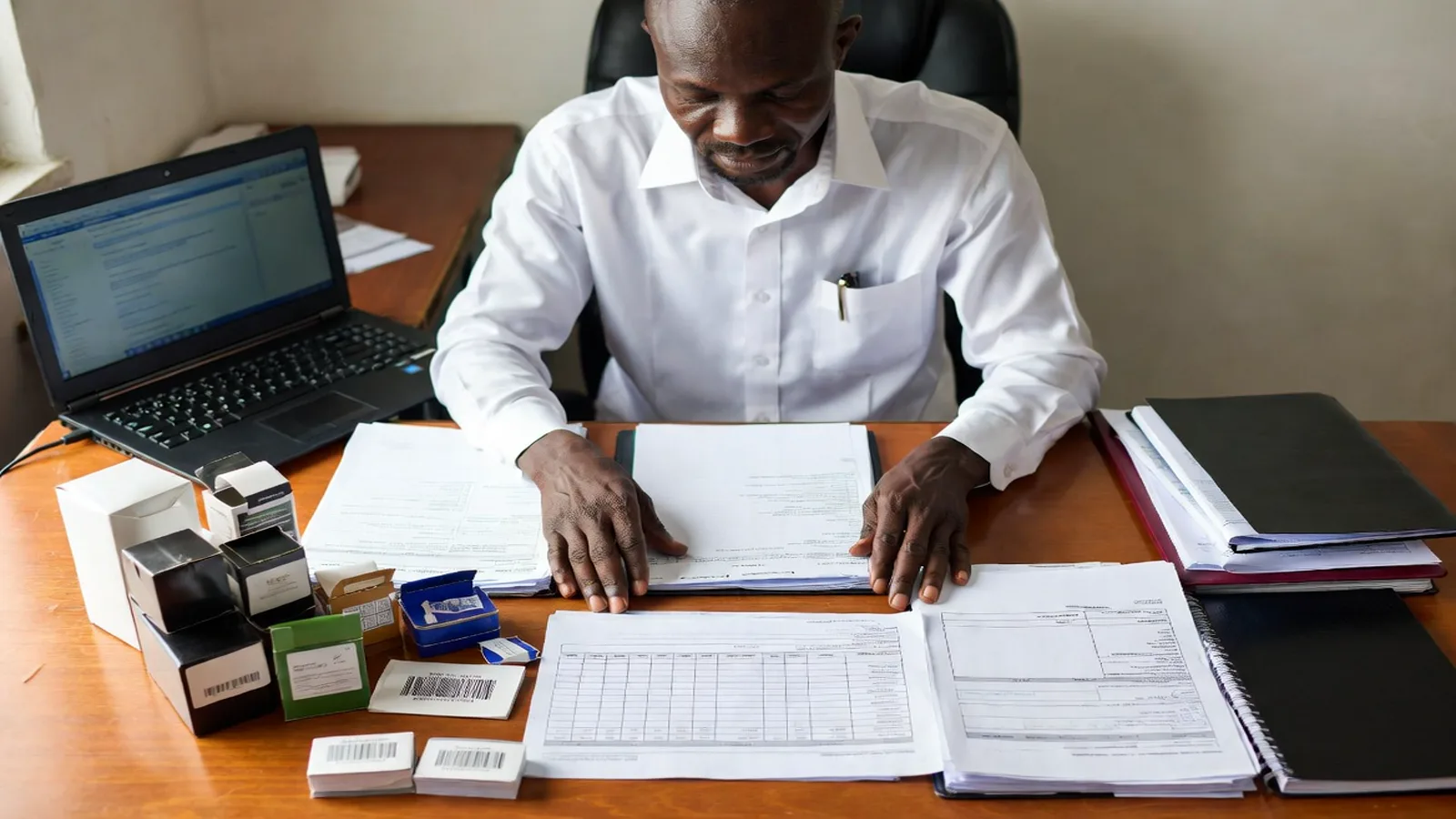
What brands typically expect vs what they actually face
Many brand managers approach their first supermarket listing negotiation focused primarily on the listing fee, which is the upfront payment to have the product added to the store's product range. That fee is real and ranges from ₦50,000 to ₦500,000 per SKU per store for independent supermarkets, with higher rates for chain accounts. But it is often the smallest of the costs that a modern trade listing requires over its first twelve months.
The more significant costs, and the ones that cause brands to underperform financially in their first year of modern trade distribution, are the working capital requirement created by payment terms, the cost of maintaining field presence sufficient to sustain availability, and the trading term structure that determines the effective margin the brand earns on each sale.
The full cost breakdown
| Cost Category | Typical Range | Notes |
|---|---|---|
| Listing fee (per SKU, per store) | ₦50K–₦500K | Chains charge more; some waive for strong brands |
| Annual renewal / continuity fee | ₦30K–₦200K | Not all retailers charge this |
| Promotional contribution (per quarter) | 1–3% of quarterly sales | Often charged as % of invoice value |
| Working capital tied up in credit terms | 45–90 days of revenue | Largest cost for undercapitalised brands |
| Field management / merchandising | ₦80K–₦250K/store/year | Required to maintain OSA and shelf position |
| Delivery and replenishment logistics | 3–6% of sales value | Varies by delivery frequency and distance |
Source: DALA brand onboarding data; typical Lagos modern trade account terms 2025

The working capital problem
The most significant financial challenge for brands entering Nigerian modern trade is not the listing fee but the working capital requirement created by payment terms. Most Lagos supermarkets pay suppliers on 45 to 90-day terms. This means a brand that delivers ₦5M of product in January will not receive payment until March at the earliest. During that period, the brand must fund not only that outstanding receivable but also the ongoing cost of resupplying the account as stock sells through.
For a brand with 20 store accounts each receiving monthly deliveries of ₦500,000 worth of goods, the accounts receivable balance at 60-day terms is ₦20M. That capital must come from somewhere: working capital facilities, retained profits, or equity. Brands that do not plan for this requirement find themselves unable to fulfil replenishment orders, which creates stockouts, which damages the listing.
DALA's 30-day payment guarantee directly addresses this problem. Instead of waiting 45–90 days for payment from each supermarket account, brands working through DALA receive payment on a 30-day cycle regardless of when individual accounts pay DALA. This halves the working capital requirement compared to direct supermarket trading on standard terms.
Break-even and what a viable listing looks like
A Nigerian modern trade listing is viable when the gross margin earned on the account revenue, after trading terms and promotional contributions, exceeds the total field and logistics cost of serving that account. For most FMCG categories, this requires a minimum monthly sales velocity per store that justifies the overhead of managing the account.
As a rough benchmark: an account selling less than ₦300,000 per month of your product is unlikely to break even on the cost of dedicated field management. An account selling ₦600,000 or more per month will generate positive contribution at most cost structures. Accounts between ₦300,000 and ₦600,000 require careful cost management to be viable.
The implication for brand strategy is that not every supermarket listing is worth having at every stage of your growth. A brand with 20 accounts, of which 8 sell below ₦300,000 per month, would be financially better served by concentrating resources on deepening performance in the top 12 accounts than by maintaining marginal listings that dilute field management capacity across too many stores.