
Start with compliance, not conversations
The most common mistake brands make when trying to enter supermarkets is starting with the buyer relationship before the compliance is ready. You book a meeting, the buyer is interested, they ask for your NAFDAC registration and your CAC certificate, and you are not ready. The moment passes, the buyer moves to the next supplier, and you are back at the beginning.
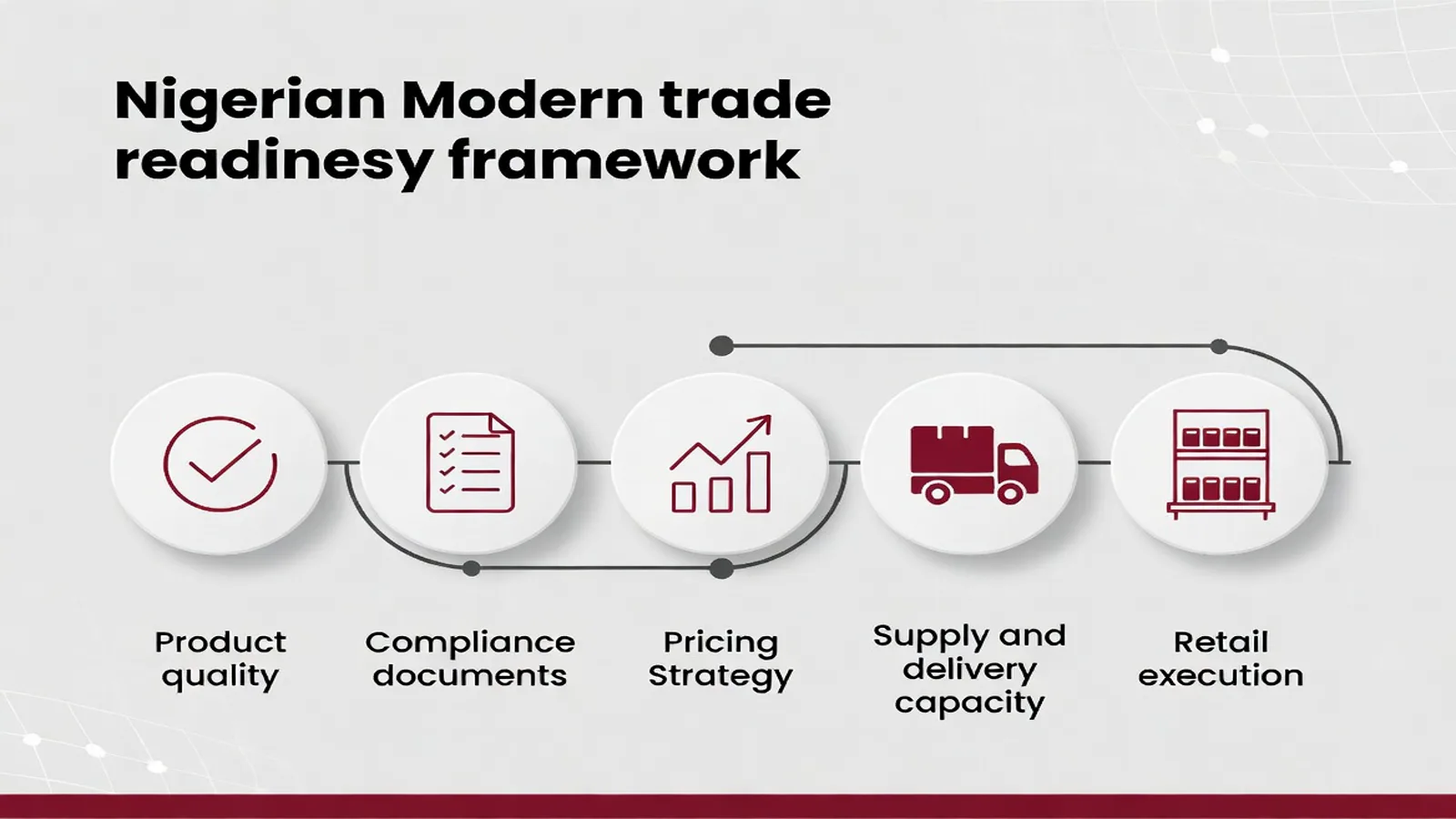
Compliance documentation for Nigerian supermarkets typically includes: a valid CAC registration certificate, NAFDAC registration for food, drug, cosmetic, and water products, SON certification for applicable categories, product barcode registration (GS1 Nigeria is the standard body), a current product liability insurance certificate for larger chains, and a completed supplier onboarding form specific to each retailer.
Some of these take weeks to months to obtain. NAFDAC registration alone can take three to six months for new products. The only rational approach is to have all compliance documentation in hand before you make your first approach to a buyer.
Your packaging must meet retail standards
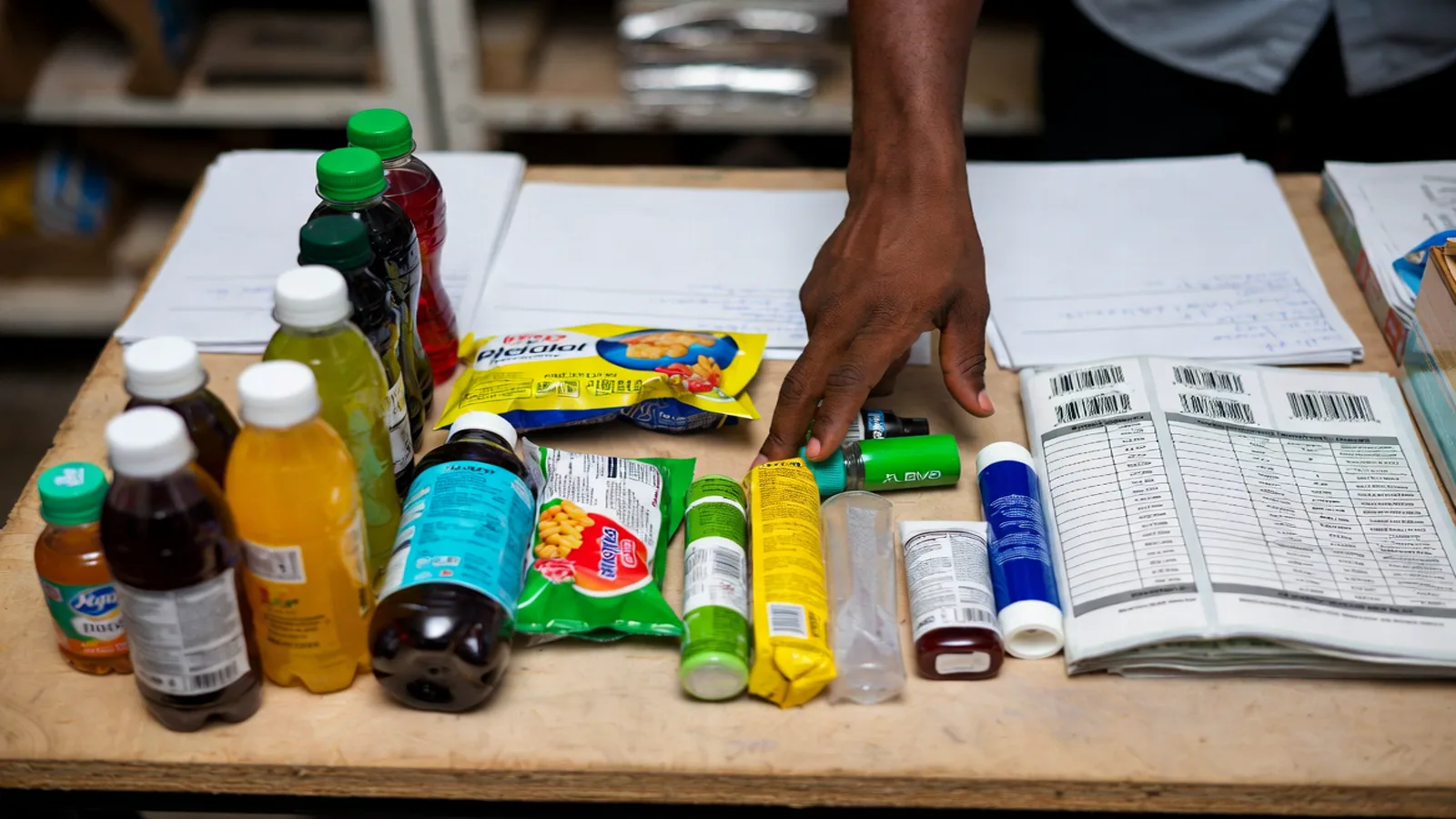
Supermarket packaging requirements are stricter than open market requirements. Your label must carry the product name, net weight or volume, manufacturer name and address, NAFDAC registration number, best-before date in a clearly legible format, country of manufacture, nutritional information for food products, and allergen declarations where applicable.
Beyond regulatory requirements, the packaging needs to work physically on a shelf. It must stack without collapsing. It needs a clear, readable front face visible from the aisle. The barcode must scan reliably without repositioning. The packaging must withstand warehouse handling and transit without deforming.
Brands that have been selling informally often have packaging that works perfectly in their current channel and is entirely unsuitable for modern retail. A packaging audit, ideally conducted by someone who has worked in retail buying, before you begin the listing process will save you a significant amount of time and embarrassment.
Know your numbers before any buyer meeting
Retail buyers in Nigeria are experienced negotiators. They will ask about your recommended retail price, your trade price, your minimum order quantity, your lead time, your return and damage policy, and your payment terms. If you do not have clear, considered answers to all of these, the meeting will end without a listing.
The trade price calculation is the most important: start with your RRP, deduct the buyer's margin expectation (typically 20–40% depending on category), deduct your distribution cost, deduct any promotional support or listing fee contributions, and confirm that what remains covers your manufacturing cost plus a viable margin. If the numbers do not work, you need to either increase your RRP or reduce your costs before approaching buyers.
Document your numbers in a one-page trade terms sheet before any meeting. Buyers respect brands that know their economics, it signals that you will be a reliable, professional partner rather than someone who agrees to terms they cannot sustain.
Build your proof before asking for shelf space
A buyer's primary concern is whether your product will sell. The most powerful thing you can bring to a listing meeting is evidence that consumers actively buy your product, sales data from your current channels, even if informal; customer testimonials or social media engagement; any press coverage or influencer endorsements; and a clear articulation of why your target consumer shops at this particular retailer.
If you are already selling through other channels, bring your velocity data: how many units per week are you selling per point of distribution? What is your repeat purchase rate? What customer feedback have you received? This information transforms you from a brand asking for a favour into a partner presenting a commercial opportunity.
Case studies from similar brands in your category can also help. DALA's case studies with Wilson's Lemonade, Zayith, and August Secrets demonstrate what structured distribution can do for sales velocity, data that buyers find compelling.
Prepare your supply chain for scale before you need it
When a supermarket listing goes well, orders arrive faster than you expect. Demand signals from modern retail are different from informal trade, buyers order in larger quantities, less frequently, and with fixed lead time expectations. If your production capacity cannot respond within 48 to 72 hours, you will experience stockouts within the first two months.
Before you finalise any listing, be honest about your maximum production capacity per week, your average lead time from production to delivery-ready stock, your buffer inventory, ideally four to six weeks of retail demand, and your cold chain capability if your products require temperature control.
If you cannot currently meet the capacity requirements, it is better to acknowledge this upfront and propose a phased launch, starting with fewer stores and scaling as production capacity grows, than to promise full supply and fail to deliver. Buyers remember supply failures more vividly than they remember supply successes.
Plan for in-store management from day one
Many brands treat the listing as the finish line. In reality, it is the starting line. Once your product is on the shelf, it needs active management: regular delivery, shelf rotation, expiry date monitoring, relationship maintenance with store staff, promotional execution, and issue resolution.
If you are entering more than three or four stores simultaneously, managing this in-house becomes a significant operational commitment. You need either a dedicated field representative or a distribution partner with in-store coverage. Without this, products drift to poor shelf positions, stockouts go unnoticed, and the listing loses value faster than the sales data would suggest.
DALA manages in-store execution across 300+ retail locations, which means brand partners get the field coverage they need without building it from scratch. For brands in the early stages of modern retail, this partnership model is often the most capital-efficient way to manage the operational requirements of a supermarket listing.
The checklist: what to have ready before your first meeting
To summarise the preparation in practical terms, here is what needs to be in place before approaching any Nigerian supermarket buyer.
Documentation: CAC certificate, NAFDAC registration (or SON, as applicable), GS1 barcode registration, product liability insurance, and completed draft supplier onboarding form.
Packaging: Labels compliant with NAICS and NAFDAC standards, barcode tested and scanning correctly, packaging reviewed for shelf-fit and transit durability.
Commercials: Confirmed RRP, trade price calculation validated against margin requirements, MOQ and lead time defined, payment and return terms prepared.
Proof of demand: Sales velocity data from existing channels, customer testimonials, any press or social media evidence of demand.
Supply plan: Realistic production capacity assessment, buffer stock plan, cold chain map if applicable, field management or distribution partner identified.
With all of this in hand, you are ready to have a productive conversation with a buyer. Without it, you are hoping. Apply to partner with DALA and let us review your readiness together, we have guided dozens of brands through exactly this process.