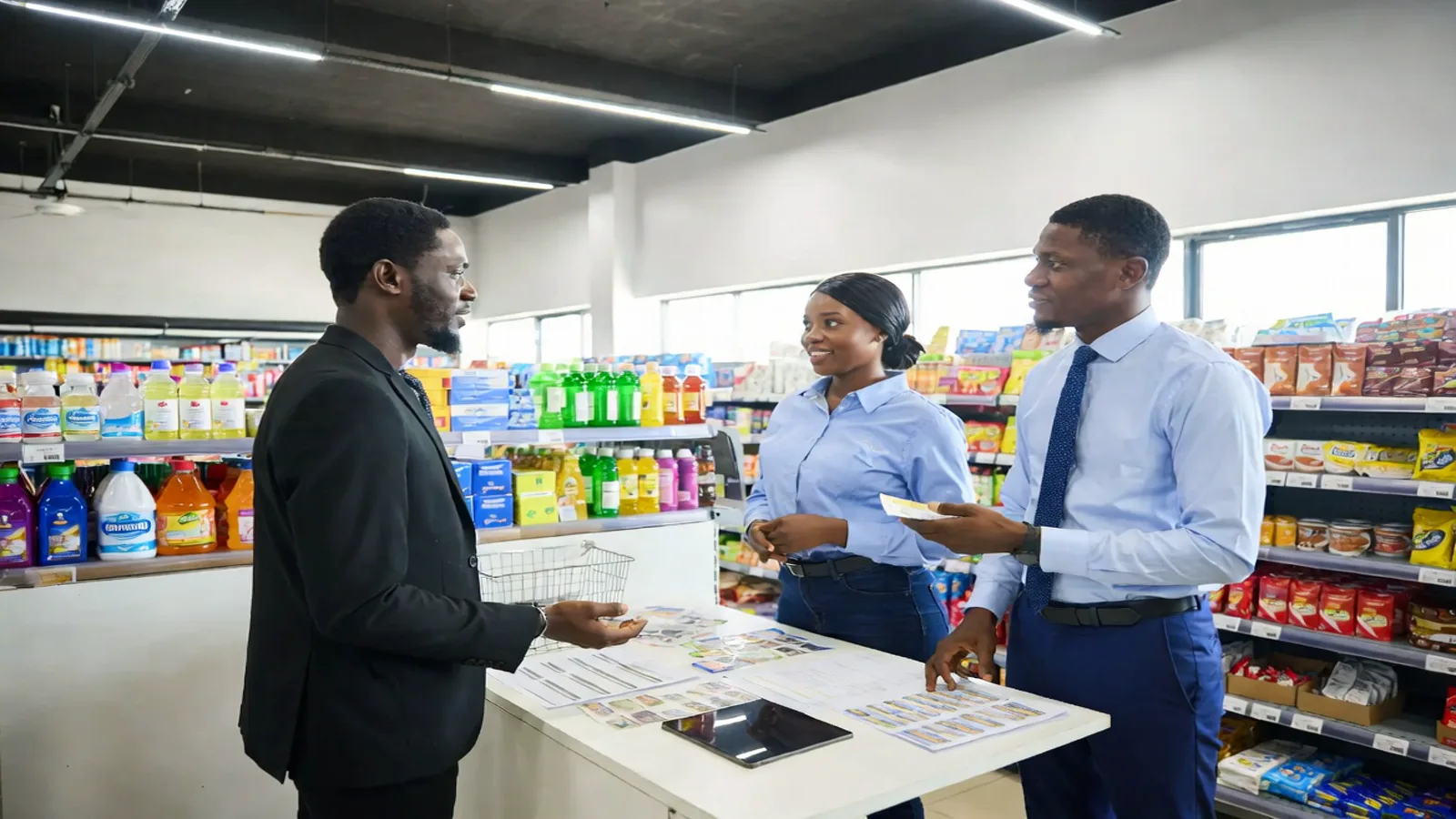
Retail execution is not delivery
There is a common mistake FMCG brands make when they first enter modern retail in Nigeria: they treat distribution as a logistics problem. Get the product to the store, collect payment, repeat. That mindset works for informal trade, roadside kiosks and open markets where relationships are personal and informal. It does not work in supermarkets.
Modern retail has standards. Shelf positions are negotiated. Products need to be rotated before they expire. Gondola ends and promotional displays require coordination. Invoicing needs to match delivery notes exactly. Payment cycles run on fixed schedules. And if your product is out of stock for more than two days, the buyer assumes your supply chain is unreliable and finds someone else.
Retail execution is everything that happens after the first delivery. It is the set of processes, relationships, and systems that determine whether your product stays on the shelf, keeps selling, and builds a credible track record with the retailer.
Why execution matters more in Nigeria
Nigeria's modern retail sector is growing fast but it is still building its own standards. Unlike mature markets with centralised distribution centres and electronic replenishment systems, most Nigerian supermarkets operate on a supplier-managed model. Your products arrive when you deliver them. Your shelf position holds only if someone is checking it. Your payment arrives when you have the right documentation and the right relationship with the right buyer.
This creates an asymmetry: brands that invest in execution get disproportionate results. A brand with average products but excellent execution, consistent delivery, shelf discipline, fast issue resolution, accurate documentation, outperforms a brand with better products but weak follow-through. The shelf does not reward quality in isolation. It rewards reliability.
In Lagos and Ogun State specifically, where traffic alone can derail a delivery schedule, execution discipline separates brands that grow from brands that stagnate at the same 5 stores for years.

The five components of strong retail execution
Execution has five distinct layers that every FMCG brand needs to manage, whether in-house or through a partner.
First is shelf availability, making sure your product is on the shelf, at the right position, in the right quantity, every time a customer looks for it. This means coordinating delivery schedules with store buying cycles, monitoring stock levels, and flagging reorder points before a stockout happens.
Second is replenishment discipline, the process of restocking, rotating products by expiry date, and removing damaged or expired units before they become a liability. A single expired unit found on a shelf can get your entire brand delisted.
Third is in-store visibility, shelf talkers, secondary placements, promotional materials. This is about making sure your product stands out once it is on the shelf.
Fourth is documentation and compliance, every delivery needs accurate invoices, delivery notes, and sign-offs. Payment disputes almost always trace back to documentation failures.
Fifth is data and reporting, knowing what is selling where, which stores need attention, and what the store buyer is saying about your product. Without this feedback loop, you are flying blind.
Shelf availability: the metric everything depends on
If there is one number that summarises retail execution, it is On-Shelf Availability (OSA). OSA measures the percentage of time your product is actually available for a customer to buy, across all the stores you supply. A brand with 90% OSA is performing well. Most brands operating without dedicated field teams in Nigeria are at 60–70% without knowing it.
The consequences compound quickly. A stockout means a lost sale. A repeated stockout means the customer switches brands. A pattern of stockouts means the buyer reduces your shelf space or removes you from the planogram entirely. In a competitive FMCG environment, recovering from a planogram removal is expensive and slow.
Improving OSA requires two things working together: reliable delivery schedules and active shelf monitoring. Delivery alone is not enough if no one is checking that the products are actually being placed on the shelf after they arrive in the back store. Many brands deliver correctly and still have empty shelves because the in-store process breaks down between the loading bay and the gondola.
Payment discipline is part of execution, not just finance
Most brands think of payment collection as a finance function. In reality, it is an execution function. The payment cycle in Nigerian modern retail, typically 30 to 60 days, only runs smoothly when documentation is perfect from the start.
A mismatched invoice, a missing delivery confirmation, a disputed quantity, any one of these can delay your payment by weeks. At scale, across dozens of stores, those delays accumulate into serious cash flow problems. Brands that cannot manage their working capital effectively cannot sustain the supply consistency that retail execution demands. The cycle becomes self-defeating: poor documentation leads to delayed payments, which leads to production delays, which leads to stockouts, which leads to delistings.
Building payment discipline means treating every delivery like a legal transaction: accurate documentation, signed confirmations, consistent follow-up. DALA's brand partners receive guaranteed 30-day payment cycles because the documentation infrastructure is built in from the first delivery.

How to know if your execution is weak
The signs of poor retail execution are visible if you know where to look. Stockouts that you only hear about from the retailer, not from your own team. Payment disputes that take more than two weeks to resolve. Products reaching their best-before date on the shelf because rotation is not happening. Feedback from store buyers that arrives weeks after the problem occurred.
If you are managing more than 10 store relationships without a dedicated field team or a distribution partner with in-store coverage, you are almost certainly experiencing execution gaps you cannot see. The stores are not going to call you every time something goes wrong. They will quietly reduce your shelf space, reorder less frequently, and eventually delist your product.
A practical audit: visit five of your current retail locations unannounced and check your shelf availability, product placement, and expiry dates. What you find will tell you more about your execution health than any sales report.
How DALA builds execution into every partnership
DALA operates as the retail execution layer between brands and stores. When a brand partners with DALA, they get more than distribution, they get a field team that monitors shelves, a documentation system that protects every payment, and a reporting process that tells them what is happening in stores every week.
This matters especially for growing brands that are not yet large enough to justify a full in-house sales force. Applying to partner with DALA means accessing the infrastructure of a mature distribution operation from day one, 300+ active store relationships, structured delivery schedules, and execution accountability built into the partnership from the start.
For brands serious about modern retail growth, the question is not whether you need retail execution support. The question is whether you build it yourself or work with a partner who has already built it. Both are valid paths. But underinvesting in execution while expecting strong retail results is not.