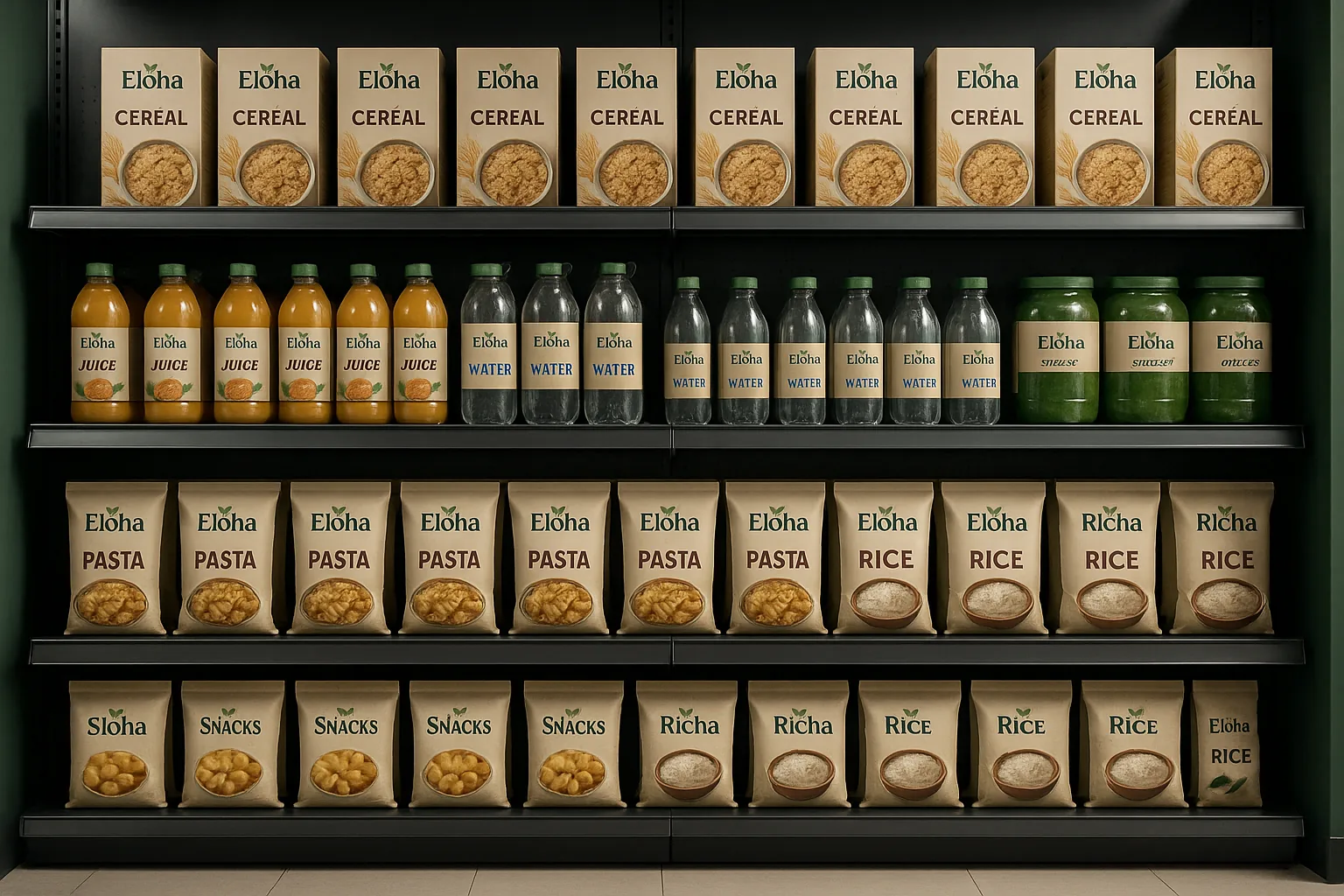
How Eloha Brand cut stockouts by 60% and built a retail structure that scales
Eloha Brand eliminated the operational chaos of self-managed distribution — reducing stockouts by 60% in the first quarter and establishing the retail infrastructure needed to expand with confidence.
“DALA gave us the retail structure we needed to scale without chaos. Their team understands both sides of the market and ensures our brand is represented with the professionalism our products deserve.”
Eloha, Founder
Building a consumer brand on top of broken distribution
Eloha Brand's founder built something consumers genuinely want — a product with real differentiation in a Nigerian consumer goods category. The consumer pull was there. The brand equity was building through word of mouth and social media. The problem was operational: every time the brand started gaining momentum in a new store cluster, execution problems would pull it back.
Products would run out of stock without restocking orders being triggered. Shelf placement would drift — products ending up in the wrong aisle, facing the wrong direction, or competing with better-placed alternatives. Payments from stores would pile up without resolution. The brand was spending energy managing logistics instead of growing.
The stockout problem: how lost shelf presence kills brand momentum
Stockouts are the silent killer of FMCG brand momentum. When a consumer comes to buy your product and it isn't there, the loss is compounded: you lose the immediate sale, you lose the brand impression that repeat purchase builds, and — if it happens more than once — you lose the customer to a competitor who is reliably on the shelf.
For Eloha Brand, stockouts were happening because restocking signals weren't reaching the right person at the right time. The brand didn't have a field team visiting stores regularly enough to catch low stock before it became no stock. And without that visibility, store managers would reorder inconsistently, creating gaps in availability that undermined the brand's shelf reliability.
How DALA built the structure Eloha needed
DALA's model starts with field visits on a defined cadence. For Eloha Brand, this meant regular field team presence at every active store — checking stock levels, rotating FIFO, photographing shelf status, and flagging any issues before they became sales losses. When a store's inventory hit the reorder threshold, a restocking order was initiated without anyone at Eloha needing to take action.
DALA also rebuilt Eloha's store placement process. Each store went through a proper onboarding — the right shelf section, the right facing count, the right price tag display, and a documented store profile that the field team could reference on every visit. The professionalism of in-store presence visibly improved: store managers noticed, and buyer relationships became easier to maintain.
Weekly reports gave Eloha's founder a clear view of the retail operation — which stores were performing, which were lagging, and where the next quarter's push should focus.
The result: 60% fewer stockouts and a distribution model that scales
In the first quarter of the DALA partnership, Eloha Brand's stockout rate across active stores dropped by 60%. That single metric — fewer times the shelf was empty — translated directly into more consistent sales, better buyer relationships, and a stronger foundation for continued expansion.
The structural change that the Founder describes is less about the specific numbers and more about confidence: the confidence to expand into new store clusters knowing that the execution layer is already in place, the confidence to invest in consumer marketing knowing that the retail shelf will convert that awareness into purchase, and the confidence to plan ahead without the constant firefighting that fragmented distribution creates.
Eloha Brand now operates with DALA's infrastructure underneath its retail ambitions — a distribution layer that grows with the brand rather than one the brand has to grow itself.
The DALA operating layer
What this case study proves
Store penetration
Which stores carry the product, where coverage is still missing, and what the next placement wave should target.
Field execution
Visit notes, shelf photos, facing checks, FIFO rotation, stockout flags, and issue escalation.
Commercial visibility
Tracked revenue, SKU movement, account performance, and payment status in one operating view.
Retail discipline
Documentation and standards that reduce payment disputes, buyer friction, and silent shelf failures.
Related next steps
Your brand can build this kind of retail record too.
If your product is retail-ready, DALA can help you move from scattered store conversations to a measurable execution system.
Start your application